
The best cabinets for a basement kitchen use moisture-resistant materials, such as marine-grade plywood for the boxes, with hardwood doors in maple or white oak. Choose durable finishes, lighter colors to brighten the space, and soft-close hardware for long-lasting performance. Avoid particleboard cabinets, dark colors in low-light basements, and poor installation on uneven concrete floors.
A basement kitchen adds major convenience and value to your home, but it requires different planning than an upstairs kitchen. Because basements are prone to moisture, cooler temperatures, and limited natural light, the cabinets you choose need to be durable and match your space.
Basement kitchen cabinets need to withstand the environment while also providing the storage, style, and function your space needs. This guide will cover which materials work best, including types of wood, finishes, and hardware.
Why basement kitchens need special cabinets
Unlike main-floor spaces, a kitchen in the basement is more likely to get exposed to humidity from the foundation, occasional temperature swings, and less airflow. That means your basement cabinets need to handle the conditions below grade without warping, swelling, or wearing out too quickly.
Whether you’re building a kitchenette for entertaining, a full kitchen for guests or multigenerational living, or a prep space connected to a larger basement layout, the cabinet choice needs to function with the space and withstand daily use.
Best materials for basement kitchen cabinets
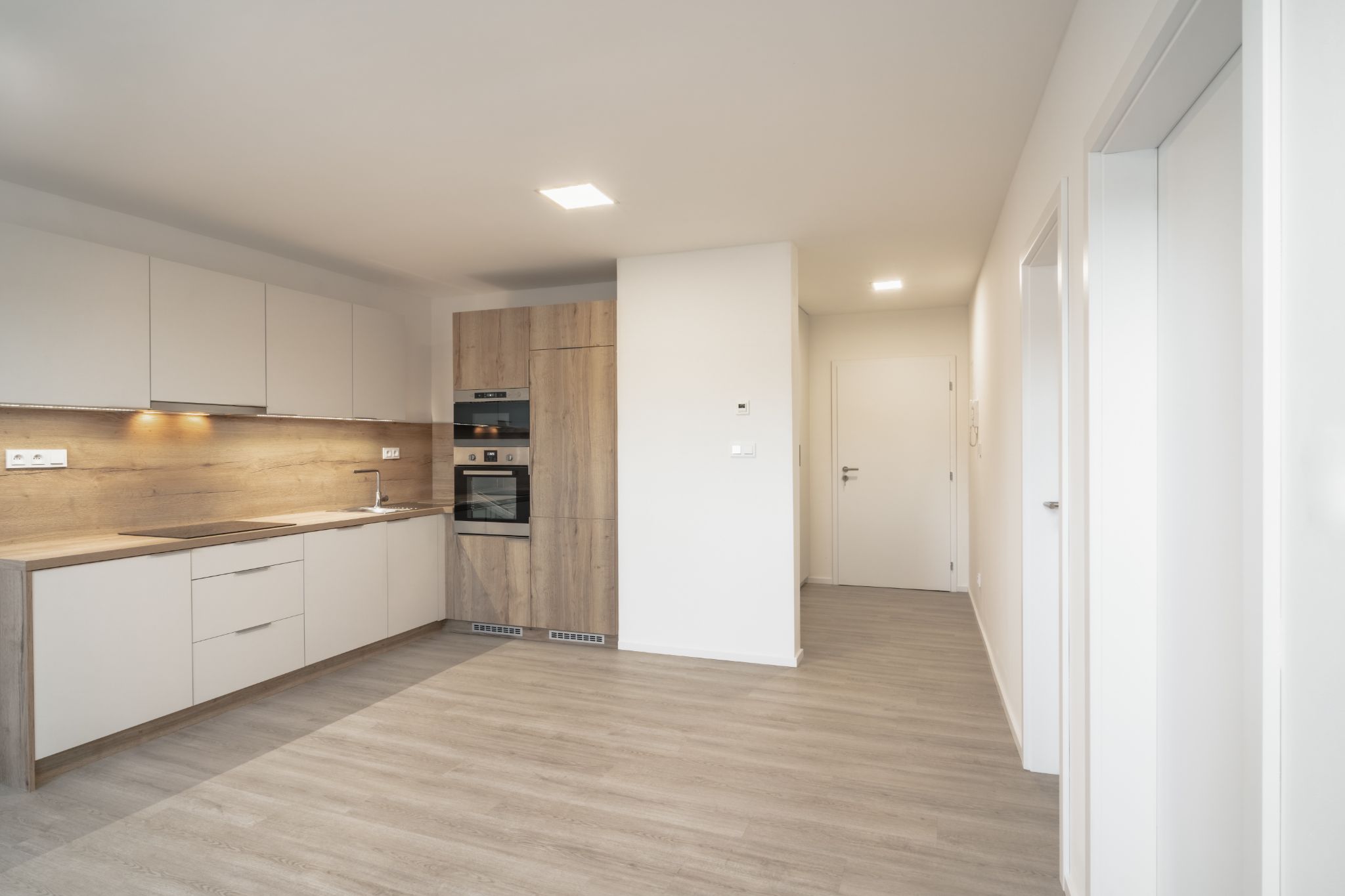
When choosing kitchen cabinets for the basement, material matters as much as style. In a basement, you want cabinet boxes and door materials that are stable, moisture-resistant, and long-lasting.
Plywood is one of the best choices for cabinet boxes. It holds up better than particleboard in areas where moisture may be present. If you want a premium option, marine-grade plywood offers even greater resistance to humidity and is a smart choice for lower-level spaces.
According to The Spruce, Manufacturers make marine-grade plywood from thin layers of high-quality hardwood and bond them together with waterproof glue. The wood itself isn’t waterproof, but it is water-resistant. It’s also lightweight and strong.
For cabinet doors and faces, hardwoods like maple and white oak are excellent options. Maple is a strong, smooth wood that works well for painted finishes, while white oak offers a durable, natural look that feels warm and timeless. Both are solid choices because they combine strength and durability with style.
If you prefer painted cabinets, properly sealed moisture-resistant MDF works well in a dry, finished basement. Make sure to protect every surface in spaces where condensation or small leaks could become a problem.
It’s worth noting that standard particleboard is usually the weakest option for basement cabinets. Avoid using it in moisture-prone areas.
Cabinet styles that work well below grade
The best basement cabinets are the ones that keep the room open, clean, and practical. Because basements often have less natural light than main-floor kitchens, cabinet style affects how a room feels.
Shaker cabinets are one of the most popular choices because they work with almost any design style. They feel simple, timeless, and easy to pair with both modern and traditional finishes. Flat-panel cabinets are another smart option if you want a more contemporary look. Their clean lines help a kitchen feel sleek and uncluttered.
If your basement has limited square footage, full-overlay cabinets create a streamlined appearance. For basements with unusual angles, low ceilings, or compact kitchen layouts, custom cabinets may be the best solution. Custom design allows you to make the most of every inch without sacrificing storage or style.
Finishes and hardware choices
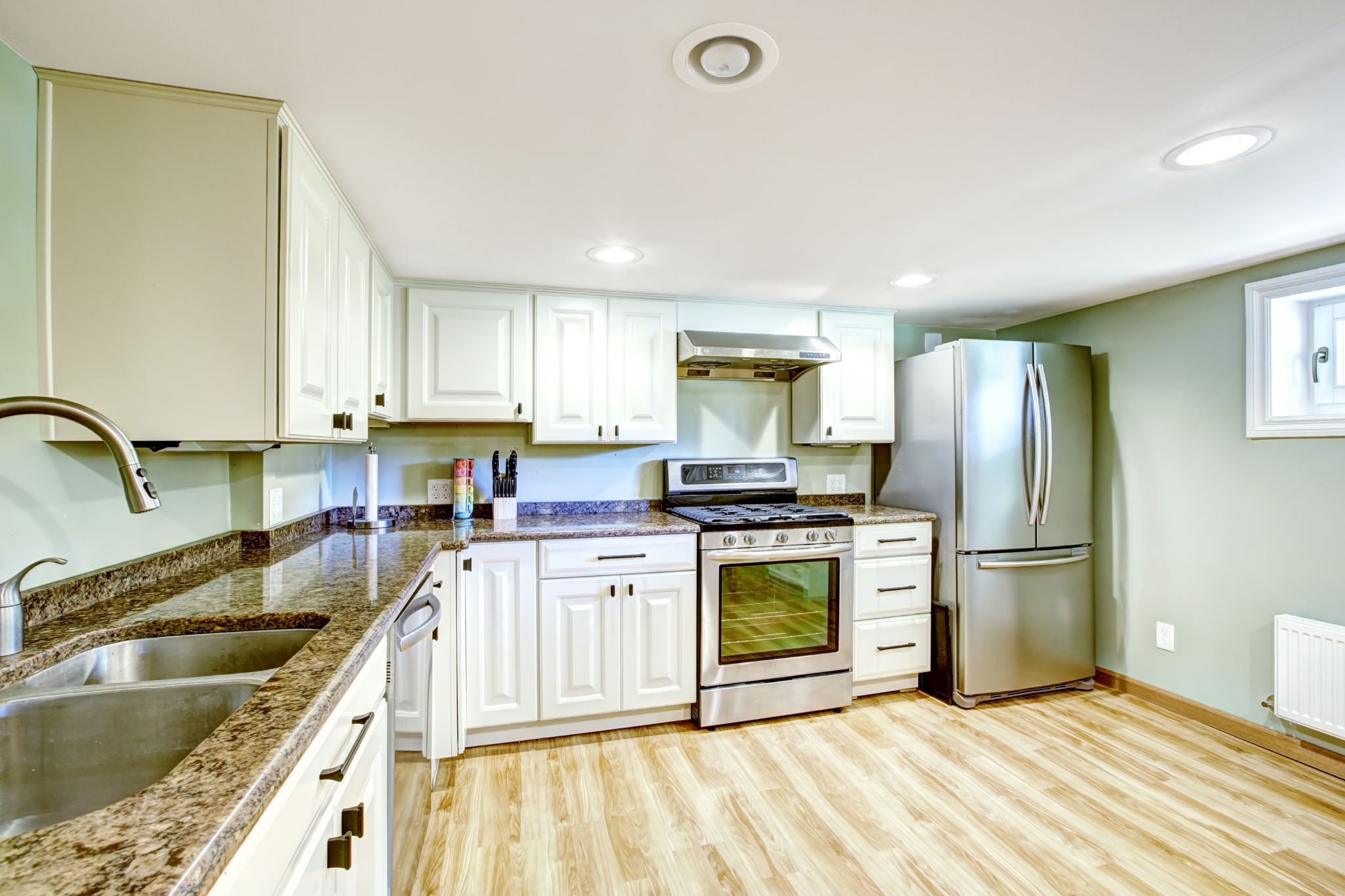
Cabinet finish matters in a basement because it protects the wood and preserves the cabinets’ appearance. A durable finish guards against moisture and everyday wear, which is important in a lower-level kitchen.
Lighter finishes help reflect light, making the space feel larger. White, soft gray, and warm natural wood tones are all popular for basement cabinets because they brighten the room without feeling cold.
Hardware is another small detail that makes a big difference. Soft-close hinges and drawer glides improve the feel of the cabinets and help them last longer. Cabinet pulls and knobs define the room’s style, whether you want something sleek and modern or more classic and traditional.
Matching cabinets to the space
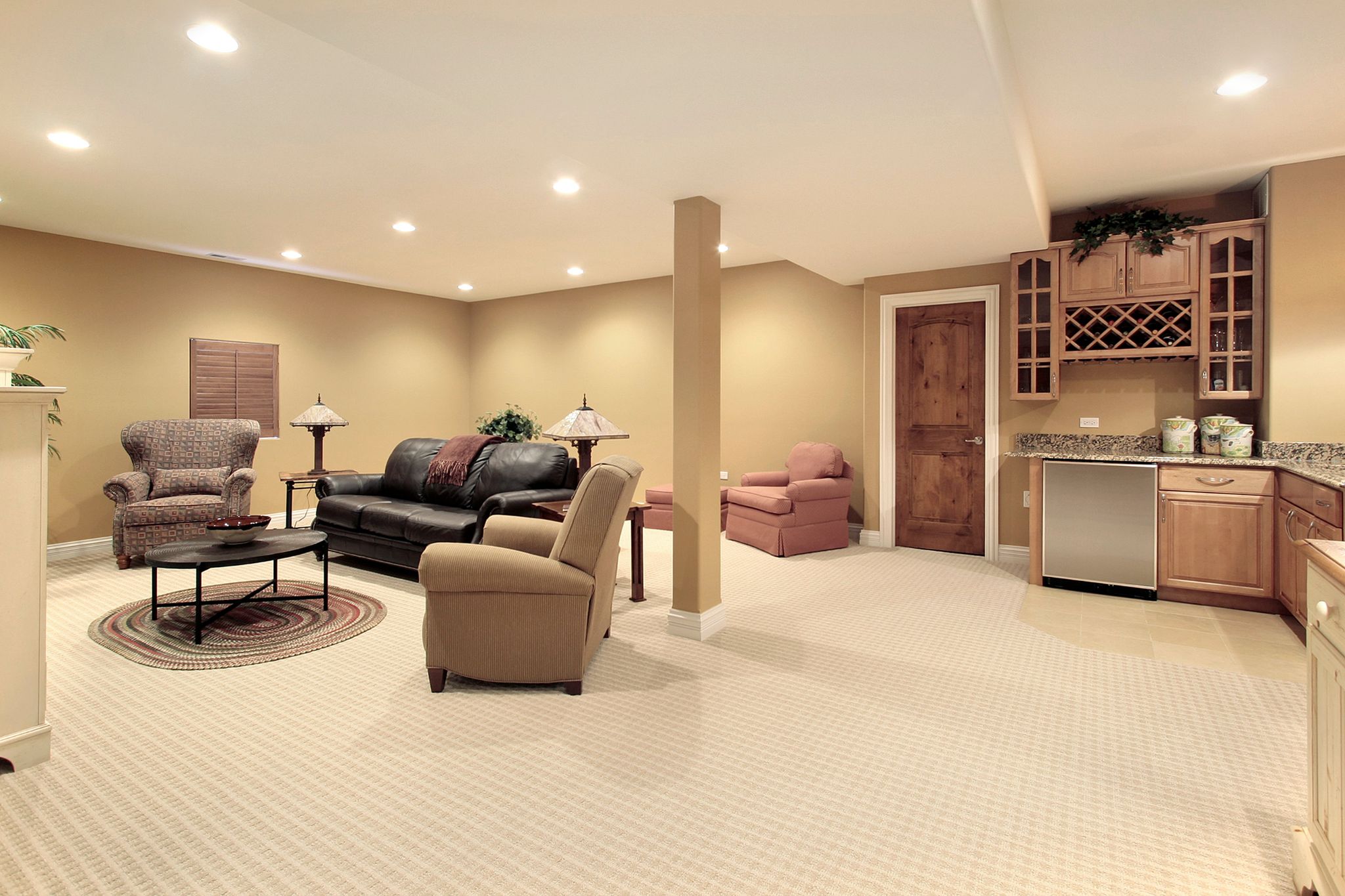
If the kitchen is mostly for entertaining, you may want a simple but polished layout with plenty of storage for glasses, snacks, and serving pieces.
If you’re finishing the basement as a guest suite or multigenerational living area, a more complete kitchen setup with pantry storage and full-height cabinets may make sense.
If the kitchen is part of a larger basement hangout space, built-in cabinetry ties the room together and keeps everything organized.
The point is to choose basement cabinets that support how you live.
How to choose the right basement kitchen cabinets
If your basement is mostly dry and finished, plywood cabinet boxes with maple or white oak doors are a strong choice because they balance durability and style. If the space is more prone to humidity, lean harder into marine-grade plywood, moisture-resistant finishes, and a lighter cabinet color to help the room feel brighter and more open.
If the kitchen is for entertaining or multigenerational living, prioritize storage features like deep drawers, pantry cabinets, and easy-access shelving. If the space is compact or highly customized, a custom cabinet layout may be the best way to make the most of the room without wasting space.
For more ideas for the kitchen in your basement, check out our blog, “Must-have Features for Your Finished Basement Kitchen Layout.”
The way you use the basement, the moisture level in the area, and the amount of storage you need will determine the right choice.
Common mistakes to avoid when choosing basement kitchen cabinets
Choosing particleboard because it’s cheaper
Particleboard cabinet boxes may look affordable at first glance, but they don’t last in basements. Particleboard swells and breaks down when exposed to moisture, which is a risk in basements. It’s better to invest in plywood, preferably marine-grade plywood, for the cabinet boxes.
Ignoring moisture and humidity risks
Don’t focus only on the cabinets’ appearance and forget about conditions below grade. In Utah basements, winter condensation, cool concrete, and seasonal humidity shifts affect how cabinets hold up over time.
Picking cabinets that are too dark for a low-light basement
Dark cabinets can easily make a basement feel smaller and heavier when there isn’t much natural light. If your basement doesn’t have many windows, lighter colors like white, soft gray, or natural wood tones make the space feel more open and inviting.
Forgetting about storage needs in a smaller basement kitchen
Basement kitchens are usually smaller than main-floor kitchens. Underestimating storage requirements leaves you with a pretty room that doesn’t function well for entertaining or everyday use. Plan for drawers, shelves, or pantry cabinets that fit the way your family uses the space.
Installing cabinets without accounting for uneven floors or concrete walls
Basement floors and walls are often concrete and may not be perfectly level. Installing standard kitchen cabinets without proper leveling or spacing will cause doors and drawers to misalign over time. That’s why professional installation should be a priority, as they know how to work with these conditions to keep cabinets functioning for the long haul.
FAQ
What is the best material for basement kitchen cabinets?
The best cabinets use moisture-resistant materials like plywood or marine-grade plywood for the boxes, with hardwood doors in maple or white oak, or sealed MDF in a dry basement. These materials hold up better in lower-level spaces where humidity and temperatures fluctuate.
Are plywood cabinets good for basements?
Yes. Plywood is one of the best choices for basement cabinets because it resists moisture better than particleboard and is less likely to warp or swell in a basement environment. For even better protection, choose marine-grade plywood.
Do basement cabinets need to be moisture-resistant?
Yes, basement cabinets should be moisture-resistant because below-grade spaces are more likely to deal with humidity, condensation, and occasional dampness. Choosing the right materials and finish helps protect your cabinets and extends their lifespan.
Can I use MDF in a basement kitchen?
You can use MDF in a kitchen if the basement is dry and you properly seal your cabinets. It is usually best for painted cabinet fronts, but not in damp or high-moisture areas.
Are shaker cabinets a good choice for a basement kitchenette?
Yes. Shaker cabinets are a great choice for a kitchenette in the basement because they are timeless, versatile, and easy to clean. Their simple design works well with many basement styles, from modern to traditional.
Why professional installation matters
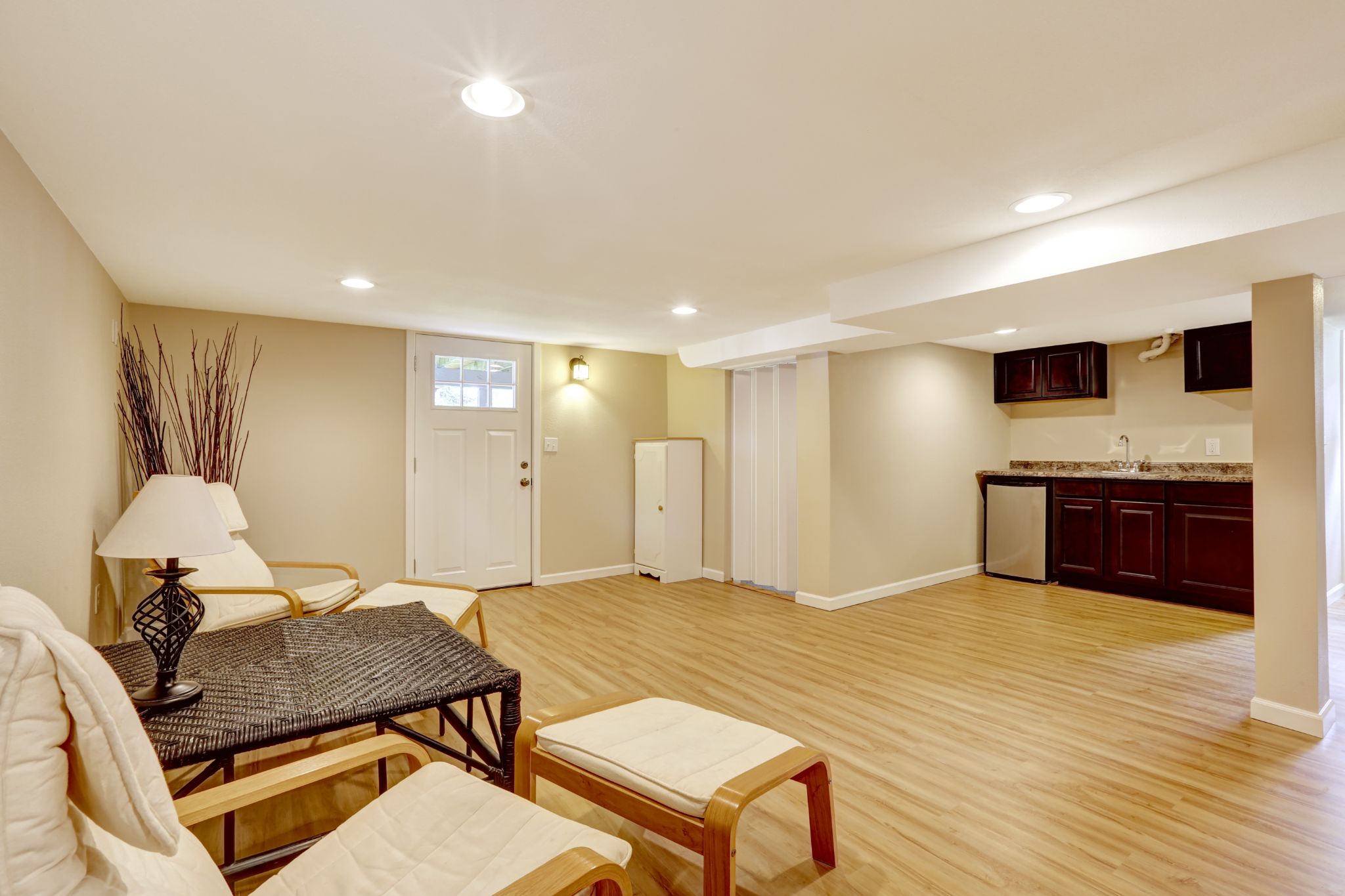
Even the best cabinets will run into problems if they get installed incorrectly. Basements often have concrete floors, uneven surfaces, and unique framing conditions that require careful planning. Proper installation helps make sure the cabinets stay level, fit securely, and perform well over time.
A professional installer can also account for moisture protection and ventilation needs. The right conditions support long-term durability. Proper installation leaves the entire kitchen feeling polished and functional.
Create your dream basement kitchen with Utah Basement Builders
The best basement kitchen cabinets balance durability, storage, and style. When building a kitchen, pick materials that handle moisture, finishes that hold up over time, and a layout that fits how you use the space.
Whether you want a simple kitchenette or a fully functional basement kitchen, your cabinets should make the room feel comfortable and complete. Utah Basement Builders is here to help you create a kitchen that looks great, works well, and fits your home for the long term.
Contact Utah Basement Builders today for a quote to upgrade your basement.