
A finished basement kitchen prioritizes traffic flow, code-compliant ventilation, good lighting, and space-efficient storage. At the same time, the space needs to feel comfortable and functional, not cramped. The best basement kitchens use size-appropriate appliances, moisture-resistant materials, and flexible seating to support hosting, multigenerational living, or a future rental without wasting square footage.
Designing a finished basement kitchen is different from planning the main kitchen upstairs. These kitchen layouts have to work around lower ceilings, limited natural light, and existing plumbing runs, affecting which features will actually work in basement kitchens.
When you get the layout wrong, you end up with dark corners, awkward traffic patterns, and an uncomfortable space. In this guide, we’ll go over must-have features that make basement kitchens feel open, bright, and practical. We’ll cover everything from layout ideas and ventilation to lighting, storage, and appliance choices, so you can make the most of every square foot in your Utah home.
What makes for great basement kitchen layouts?
First, a great finished basement kitchen layout fits the space you actually have and how you plan to use it, not only what looks good on paper. In basements, that usually means prioritizing clear traffic flow, space-saving options, and smart placement of plumbing and ventilation to make the kitchen feel integrated with the rest of the lower level.
Thoughtful layouts also account for basement-specific challenges. You need to account for issues like less natural light and higher humidity by including layered lighting, proper exhaust, and durable finishes from day one.
Step-by-step guide to planning your basement kitchen layout
1. Clarify how you’ll use the space
Decide whether your basement kitchen will support casual entertaining, a guest suite, multigenerational living, or a future rental, since that determines whether you need a full kitchen or a compact kitchenette.
2. Choose a layout that fits your space
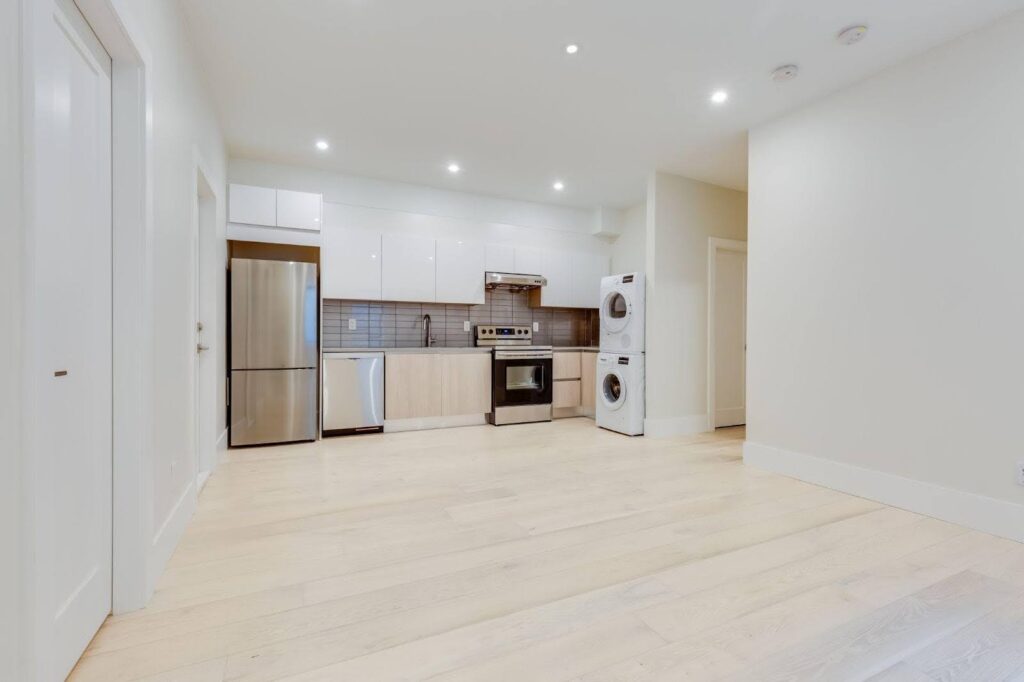
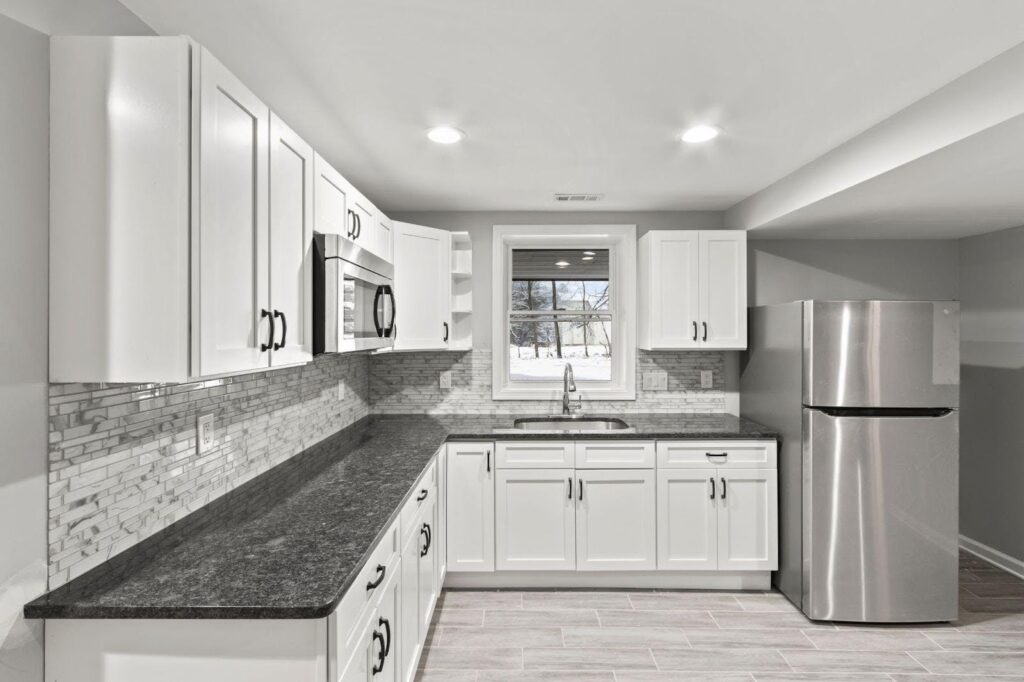
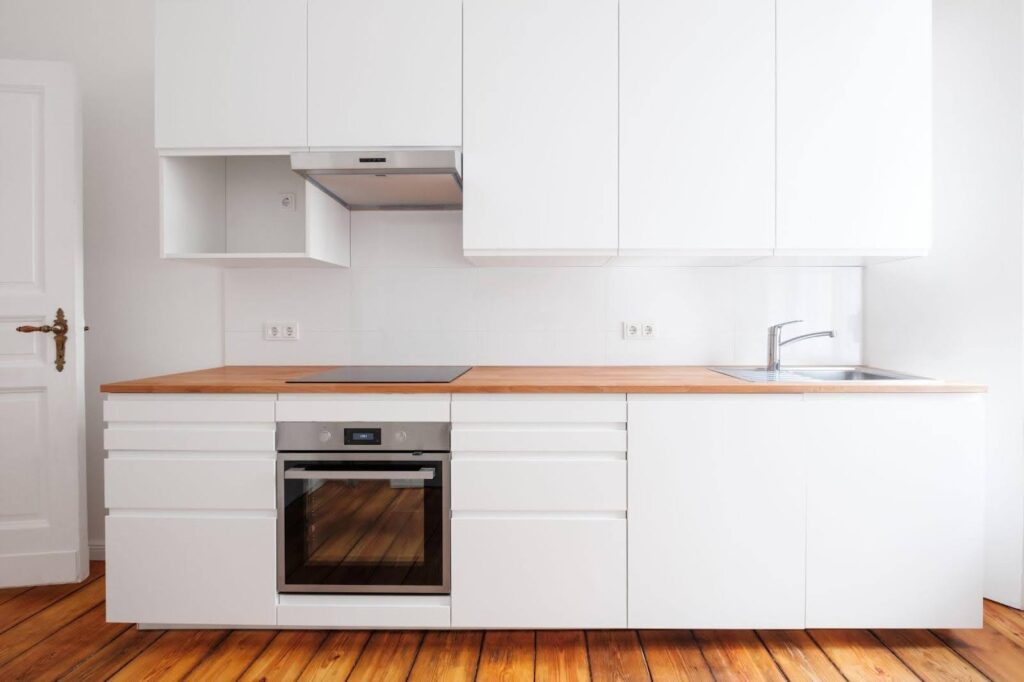
For smaller basements, consider a one-wall or corner kitchenette; in larger spaces, an L-shaped or island layout creates better zones for cooking, eating, and relaxing.
3. Plan around existing plumbing and utilities
Placing the sink and dishwasher near existing plumbing lines reduces cost and complexity and often helps you keep an efficient work triangle in tight basement kitchens.
4. Prioritize ventilation and air quality
Include a properly ducted range hood or exhaust fan that vents to the outside so smoke, steam, and odors don’t linger in the lower level.
5. Layer your lighting
Combine overhead fixtures, under-cabinet lighting, and task lights to offset limited daylight and meet basic illumination guidelines for habitable rooms.
6. Select right-sized appliances
In many basement kitchens, a smaller range, under-counter fridge, or drawer dishwasher provides everything you need while keeping walkways open.
7. Maximize storage
Use vertical cabinets, corner storage solutions, and pull-out organizers to keep basement kitchens clutter-free and easy to use.
8. Choose moisture-resistant materials
Opt for materials rated for below-grade use, such as tile or luxury vinyl plank flooring and water-resistant cabinetry finishes, to handle the typical humidity shifts in basements.
Check out more tips for a successful basement kitchen remodel.
Real-life ways homeowners use basement kitchens
-
Entertainment hub
Many homeowners add basement kitchens to keep snacks, drinks, and meal prep close to a home theater or game room, so guests can stay downstairs instead of constantly going up and down stairs.
-
Multigenerational living
A finished basement with a kitchen gives aging parents or adult children more independence while keeping everyone under one roof, especially when combined with a bedroom and bathroom suite.
-
Future rental or guest suite
Some homeowners design basement kitchens to be “rental ready,” with a full-size range, fridge, and dedicated dining zone so the space can later convert into an accessory apartment if local codes allow.
Benefits of adding a basement kitchen
- You get a better use of existing space: Turn an underused lower level into a functional extension of your main living area.
- Make it more convenient for entertaining: Serve food and drinks to family and guests, instead of carrying everything downstairs.
- Support multigenerational living: Give different generations more privacy and independence with a dedicated cooking space while staying close together.
- Potentially boost home value: Well-planned finished basements with amenities like a kitchen can increase ROI.
- Everyday upgrades: A cooler lower-level kitchen may be more comfortable in summer and helps keep cooking mess away from your main kitchen when you’re hosting.
Basement kitchen mistakes to avoid
-
Ignoring ventilation needs
Skipping a dedicated exhaust solution may trap odors and moisture, making the basement feel stuffy and uncomfortable.
-
Overloading the space
Trying to cram a full-size range, a giant fridge, and an oversized island into a compact basement results in cramped walkways and poor workflow.
-
Underestimating lighting
Relying on a single overhead fixture leaves work areas too dim.
-
Choosing the wrong materials
Using flooring or cabinets not suited to below-grade conditions increases the risk of warping, moisture damage, or premature wear.
-
Not planning for the future
Designing only for today’s needs, without considering future uses such as a rental or multigenerational suite, limits the long-term value of your finished basement kitchen.
Data and research insights for basement kitchens
-
Finished basement ROI
Nationally, finishing a basement often delivers around a 70% return on investment, reflecting how much buyers value usable lower-level living space.
-
Ventilation performance expectations
Common building-code guidance for single-family homes calls for local kitchen exhaust of about 100 cubic feet per minute to effectively remove cooking pollutants and moisture.
-
Multigenerational living trends
Design experts highlight that multigenerational living can improve financial efficiency and make better use of square footage, especially when designing spaces like kitchens to support multiple users and accessibility needs.
Recommended features, fixtures, and products
- Ventilation solutions: Appropriately sized, ducted range hood or exhaust fan that vents outdoors to manage steam, smoke, and odors in your basement kitchen
- Layered lighting: Recessed ceiling fixtures, under-cabinet LEDs, and task pendants to reach comfortable illumination levels in a below-grade space.
- Compact or flexible appliances: Apartment-size ranges, counter-depth or under-counter refrigerators, and drawer dishwashers to keep walkways open in smaller layouts
- Space-saving storage: Tall pantry cabinets, corner units, and pull-out organizers that take advantage of vertical space in tight basement kitchens.
- Durable, basement-ready finishes: Moisture-resistant flooring and cabinetry finishes designed for below-grade use to handle typical basement humidity.
- Island or peninsula seating: A small island or peninsula that doubles as prep space and casual dining, making the basement kitchen feel social and inviting
FAQ
How big should a finished kitchen in the basement be?
For most homes, a functional basement kitchen or kitchenette can fit into a relatively compact footprint if the layout is efficient. Usually, they are on one wall or a corner L-shape with at least one uninterrupted counter run. The right size depends on the size of your basement and whether you’re supporting light entertaining, full-time living, or a potential rental suite.
Do basement kitchens need special ventilation?
Basement kitchens typically need a dedicated ventilation strategy to remove steam, smoke, and odors from a lower-level space. It could be a ducted range hood or exhaust fan. Proper exhaust helps protect finishes, improve air quality, and keep the area comfortable when cooking.
What layout works best for small basement kitchenettes?
In smaller finished basements, one-wall and corner (L-shaped) layouts are often the most practical because they keep appliances and storage on one side and preserve open floor space. Adding a small island or peninsula can provide extra prep surface and seating without enclosing the room.
Will a finished basement kitchen add value to my home?
A well-planned finished basement can contribute to an overall basement remodel ROI of around 70% in many markets, provided it includes amenities like a kitchen, bath, and living area. Buyers tend to see lower-level kitchens as a bonus.
Is a full kitchen better than a kitchenette in a basement?
It depends on your goals. If you anticipate multigenerational living or a future rental, a full kitchen with a range and a larger fridge may make sense. For entertainment-focused spaces, a compact kitchenette with a cooktop, sink, and under-counter fridge may be more space-efficient.
Designing basement kitchens for Utah homes
In Utah, finished basement kitchens do double duty: they stay naturally cooler in summer and give families more flexible living space during long winters. Because many Utah homes sit on sloped lots or have partial walkouts, good layouts often connect basement kitchens to patios or gathering areas for easy indoor–outdoor entertaining.
It’s also important to account for the dry climate and seasonal temperature swings when choosing materials and planning ventilation so your finished basement kitchen stays comfortable and durable for the long haul.
Plan a basement kitchen for your home with Utah Basement Builders
The best finished basement kitchen layouts start with a clear purpose, then layer in smart circulation, ventilation, lighting, storage, and materials that work beautifully in a below-grade space. When you plan around how you’ll actually use the space, you get a basement kitchen that feels natural, not like an afterthought.
Utah Basement Builders can help you make those decisions with confidence, from choosing the right layout and features to navigating permits and construction, so your finished basement kitchen looks great, functions smoothly, and adds lasting value to your home. Contact Utah Basement Builders today and get a quote for your basement remodel.